Last updated: October 2026
Cost of living in Kampala depends mostly on two things: where you live and whether you have children in international schools. Online estimates vary widely, from under $500 to over $1,200 a month for a single person, which makes planning hard. This guide breaks down rent, utilities, food, transport and school fees using published 2025 and 2026 data. A single expat in a secure neighbourhood typically spends $700 to $1,200 a month, while international school fees can add $20,000 to $30,000 a year per child.
Key takeaways
- A single expat typically spends $700 to $1,200 a month in Kampala, including rent in a secure area.
- Rent is the biggest variable. A one bedroom apartment ranges from about $200 outside the centre to over $1,000 in Kololo.
- International school fees are the largest cost for families. ISU charges about $27,600 a year for Grades 1 to 5.
- Electricity distribution moved from Umeme to the state-owned UEDCL on 31 March 2025.
- A serviced apartment with utilities included can cost less than renting and furnishing a flat for stays under a year.
Cost of living in Kampala at a glance
The table below shows typical monthly budgets for expats in Kampala. Figures are ranges based on several 2025 and 2026 cost of living sources and exclude school fees.
| Household | Typical monthly budget (USD) | Main drivers |
|---|---|---|
| Single expat, modest lifestyle | $700 to $1,200 | Rent, eating out, transport |
| Couple, comfortable lifestyle | $1,500 to $2,500 | Larger apartment, car or driver |
| Family of four | $2,500 to $4,000 plus school fees | House rent, staff, schooling |
The Ugandan shilling trades at roughly UGX 3,600 to 3,800 per US dollar. Check the current rate before you budget.
Rent and housing
Rent is the largest monthly cost for most expats. Prices depend on the neighbourhood, the building and whether the apartment is furnished.
| Property | Typical monthly rent (USD) |
|---|---|
| 1 bedroom, outside the centre | $130 to $400 |
| 1 bedroom, central or expat area | $270 to $1,100 |
| 3 bedroom, central or expat area | $800 to $2,100 |
Expatistan’s crowd-sourced figures put a furnished 85 square metre apartment in an expensive area at about UGX 4.2 million a month. The same space in a normal area costs about UGX 2.2 million.
Rent by neighbourhood
Kololo and Nakasero are the most expensive areas. Naguru and Bugolobi follow closely. Muyenga, Ntinda and Bukoto offer more space for the money.
The guide to where to stay in Kampala compares these areas in detail.
Upfront costs
Many Kampala landlords ask for rent several months in advance. Budget for this, plus furniture, appliances and utility connections if the apartment is unfurnished.
Utilities and internet
Utilities for a mid-sized apartment usually cost $80 to $130 a month.
- Electricity: the state-owned Uganda Electricity Distribution Company Limited (UEDCL) took over distribution from Umeme on 31 March 2025. Most homes use prepaid meters topped up by mobile money.
- Water: supplied by the National Water and Sewerage Corporation and billed monthly.
- Internet: home fibre and mobile data plans are widely available. Speeds and prices vary by provider and area.
- Backup power: power cuts still happen. Expats in houses often run a generator or solar backup, which adds fuel and maintenance costs.
Food, groceries and eating out
Local produce from markets is cheap. Imported goods in supermarkets cost more than in Europe or North America.
| Item (Expatistan crowd-sourced prices) | Price (UGX) |
|---|---|
| Business district lunch with a drink | About 17,000 |
| Cappuccino in an expat area | About 14,000 |
| Dinner for two at an Italian restaurant in an expat area | About 154,000 |
| 12 large eggs | About 7,700 |
| 500 g boneless chicken breast | About 12,000 |
A single person who cooks at home typically spends $100 to $200 a month on groceries. Families should budget considerably more, especially for imported brands.
Transport
Most expats get around by car, private driver or ride hailing apps such as Uber and Bolt.
- Ride hailing: the cheapest comfortable option for short trips across the city.
- Car and driver: common for families and senior staff. It removes the stress of Kampala traffic and parking.
- Motorcycle taxis (boda bodas): cheap and fast in traffic, but many organisations advise staff against using them for safety reasons.
- Minibus taxis: very cheap, but crowded and route-based.
A typical expat transport budget runs from $50 to $100 a month without a car, and much more with a car and driver.
International school fees
School fees are the single largest cost for expat families. Fees vary widely between schools.
| School | Example annual tuition (USD) |
|---|---|
| International School of Uganda (ISU), Lubowa | About $27,600 for Grades 1 to 5 (2026–27) |
| Kampala International School Uganda (KISU), Bukoto | About $23,000 for Years 3 to 6 (2025–26) |
| Kampala Diplomatic International School, Ntinda | About $4,300 to $5,400 (2025–26) |
Most schools also charge registration, enrolment, lunch and uniform fees. Check each school’s current fee schedule before you accept a job offer.
ISU sits in Lubowa off Entebbe Road, south of the city. Families with children there often choose housing in south Kampala, including Muyenga, Munyonyo and Lubowa.
Healthcare and insurance
Kampala has several private hospitals and clinics used by expats. Serious cases are sometimes referred to Nairobi or further abroad.
International health insurance with medical evacuation cover is strongly recommended. Many employers include it in relocation packages.
Serviced apartment vs renting: what makes sense?
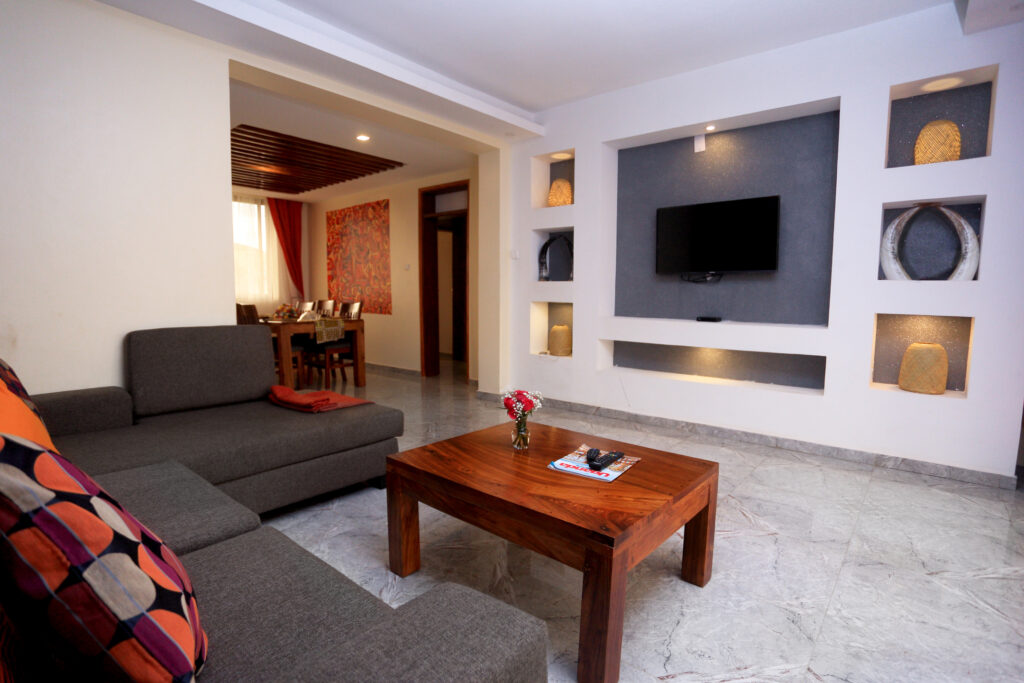
Renting a flat long term is usually cheapest after the first year. For shorter stays, a serviced apartment often costs less once you add furniture, utilities and advance rent.
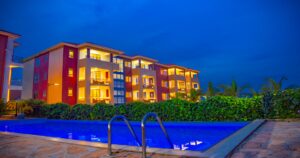
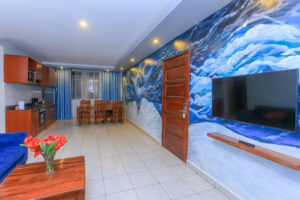
Bon Bini Residence in Muyenga shows the monthly cost on stays of 30 nights or more:
| Apartment | 30+ night rate | Approx. monthly cost | Included |
|---|---|---|---|
| Pool Studio | $30 a night | About $900 | Water, electricity, WiFi, daily housekeeping |
| One Bedroom Apartment | $38 a night | About $1,140 | Same as above |
| Deluxe Two Bedroom | $63 a night | About $1,890 | Same as above, sleeps up to 6 |
Rates drop again on stays of 90 nights or more. There is no deposit, no furniture to buy and no utility accounts to open.
See the full rate table on the long stay and monthly apartments page, or read about expat housing in Kampala.
How to keep costs down in Kampala
- Shop at local markets for fruit, vegetables and staples.
- Choose a neighbourhood close to work or school to cut transport costs.
- Negotiate rent, especially on longer leases.
- Pay for everyday items with mobile money to avoid carrying cash.
- Start in a serviced apartment while you learn the city, then rent long term.
Frequently asked questions
How much does it cost to live in Kampala per month?
A single expat typically spends $700 to $1,200 a month, including rent in a secure neighbourhood. Families spend considerably more, mainly because of house rent and international school fees.
Is Kampala expensive for expats?
Kampala is affordable compared with most capital cities, except for expat-standard housing in Kololo and Nakasero, imported groceries and international school fees.
How much is rent in Kampala?
A one bedroom apartment ranges from about $130 to $400 a month outside the centre and from $270 to over $1,000 in central or expat areas. Three bedroom apartments in expat areas cost $800 to $2,100.
How much are international school fees in Kampala?
Fees vary widely. ISU charges about $27,600 a year for Grades 1 to 5 in 2026–27, while some smaller international schools charge $4,000 to $6,000.
Who supplies electricity in Kampala?
The state-owned Uganda Electricity Distribution Company Limited (UEDCL) took over electricity distribution from Umeme on 31 March 2025. Most homes use prepaid meters.
Written by the Bon Bini Residence team in Muyenga, Kampala. We host business travellers, families and expats in our serviced apartments all year and update this guide as things change.
Moving to Kampala? See all apartments and check availability, or message us on WhatsApp at +256 706 444 444.